
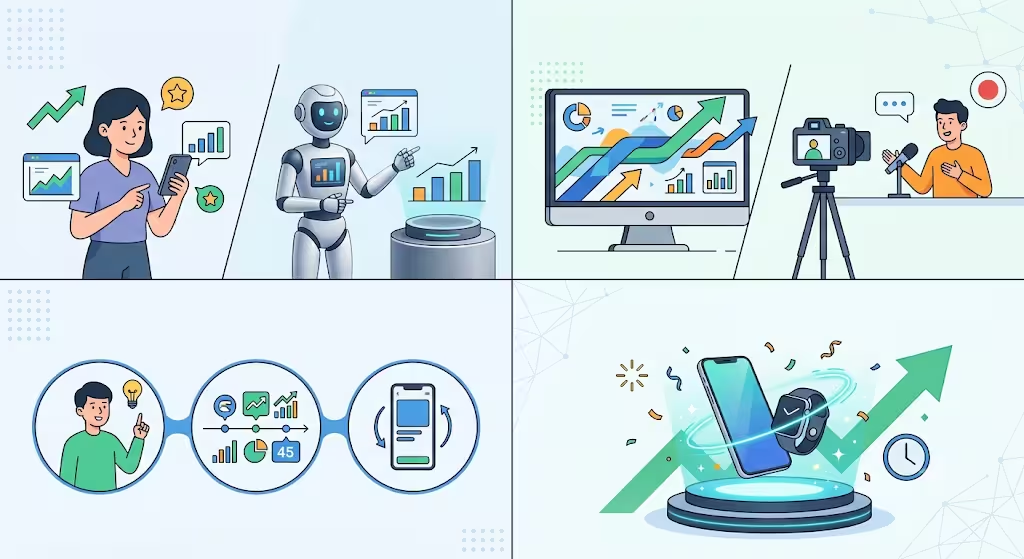
Animation gets used for everything from a 20-second social ad to a full product-launch explainer, and the right choice of style and technique changes the budget and timeline more than almost any other decision. This guide walks through the trade-offs.
2D vs. 3D for marketing
2D animation is faster to produce and reads well for stylised, character-led or budget-conscious content. 3D animation is better suited to product visualization, mechanical processes or anything that needs to look physically real. Many brands mix both - 2D for social cutdowns, 3D for the hero product shot.
When to use motion graphics
Motion graphics - animated text, icons and data - work best for explaining a process, a statistic or a workflow without needing characters or a narrative. They're typically faster and cheaper than character animation and pair well with a voiceover script.
Explainer video styles
Common formats include whiteboard-style, flat 2D character animation, kinetic typography and 3D product-cutaway explainers. The right style depends on how abstract or physical the product is - a software feature suits kinetic type; a mechanical product suits a 3D cutaway.
Product animation use cases
Product animation is used for features too small, fast or internal to film - an engine's internal combustion cycle, a device's assembly sequence, or a software UI flow. It's often the only way to visually demonstrate a claim a live-action shoot simply can't capture.
Related
Explore →Animation & VFX
Written by EIZVIZ Production
A Nagpur-based studio producing corporate video, 3D visualization, animation & VFX for clients across India.
Next guide
Read it →